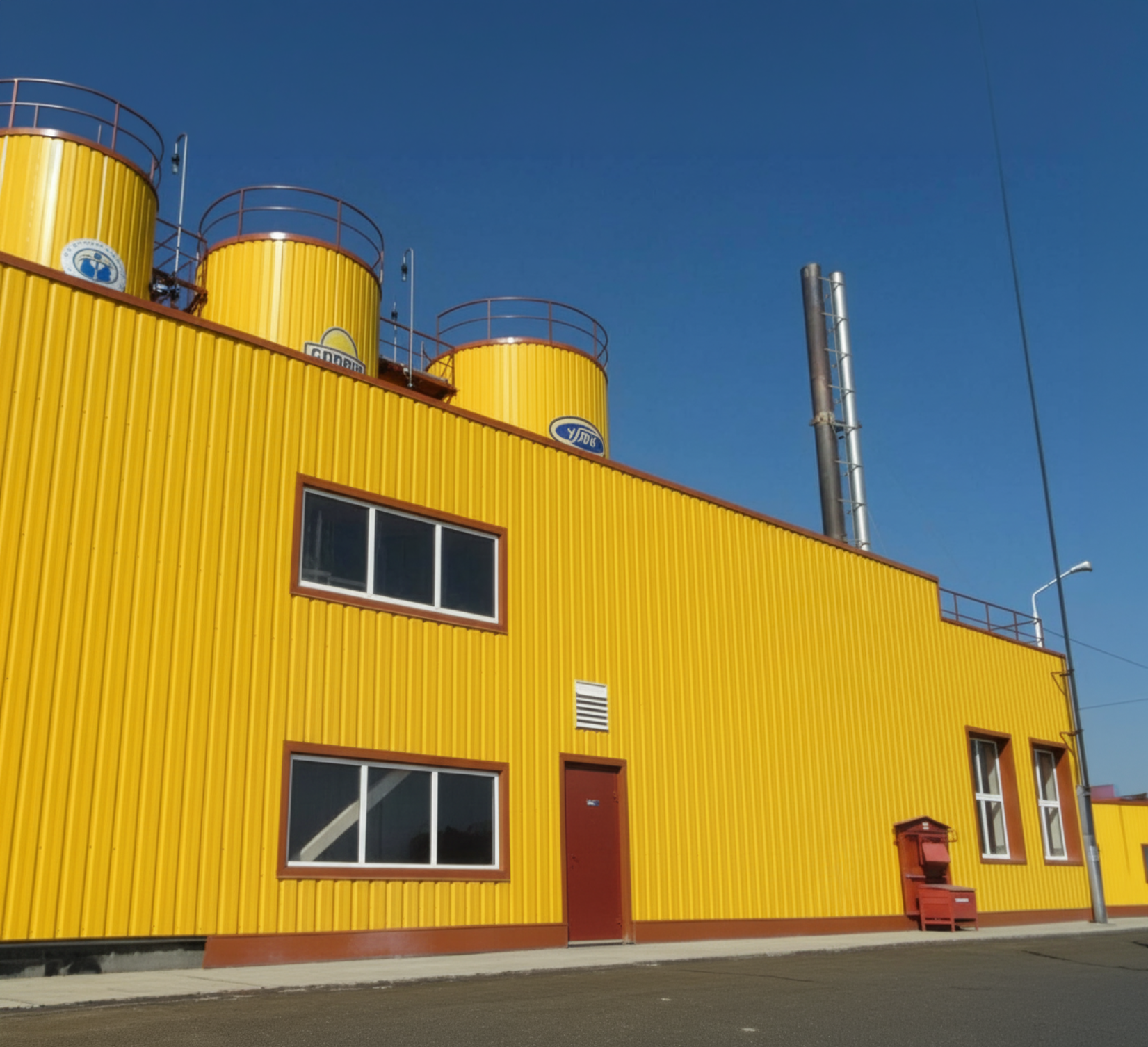
Wastewater Treatment Plants
Industrial wastewater generated by enterprises of various types requires a differentiated approach to treatment because:
- it has a heterogeneous qualitative and quantitative composition
- it contains varying amounts of organic and inorganic substances with different rates of oxidation
- the substances in the wastewater are present in a dissolved, colloidal, or suspended state
To determine the suitability of wastewater for biological treatment under artificial conditions, the following factors are taken into account: the ratio of organic to inorganic components, the concentration of pollutants as measured by chemical oxygen demand (COD), the presence of the necessary amount of biogenic elements for the normal life activities of activated sludge microorganisms, the pH of the medium, and other factors.
The most common and cost-effective methods of wastewater treatment are biological methods based on aerobic and anaerobic technologies.
Key indicators
More Indicators%, TSS removal,
VR without restrictions
treatment depth
up to 2000 mg/L
kg/m³, maximum HSK load on the reactor
%, savings on operating costs
m², 10 times smaller than the area available for development
%, capital investments 5 times lower
per 1 metric ton of HSK/day
| Investment indicators | Classic solutions | UTC Anaerobic-Aerobic Treatment |
|---|---|---|
| Land area required for construction at a rate of 1 t of HSK per day | 200 m² | 20 m² |
| Capital investment per 1 t of HSK per day | 300–500 thousand euros | 50–100 thousand euros |
| Energy independence | none | full-scale/biogas production |
| Energy consumption, | 0,7 - 1 kW/kg of HSK | 0,07-0,1 kW/kg of HSK |
| Excess sludge | 0.3–1 kg/kg dry matter | 0.03–0.05 kg/kg dry matter |
| Operating costs | 100 euro per 1 t of HSK per day | - 100 euro per 1 t of HSK per day/ no costs for sludge and aeration sludge disposal + on-site heat generation |